























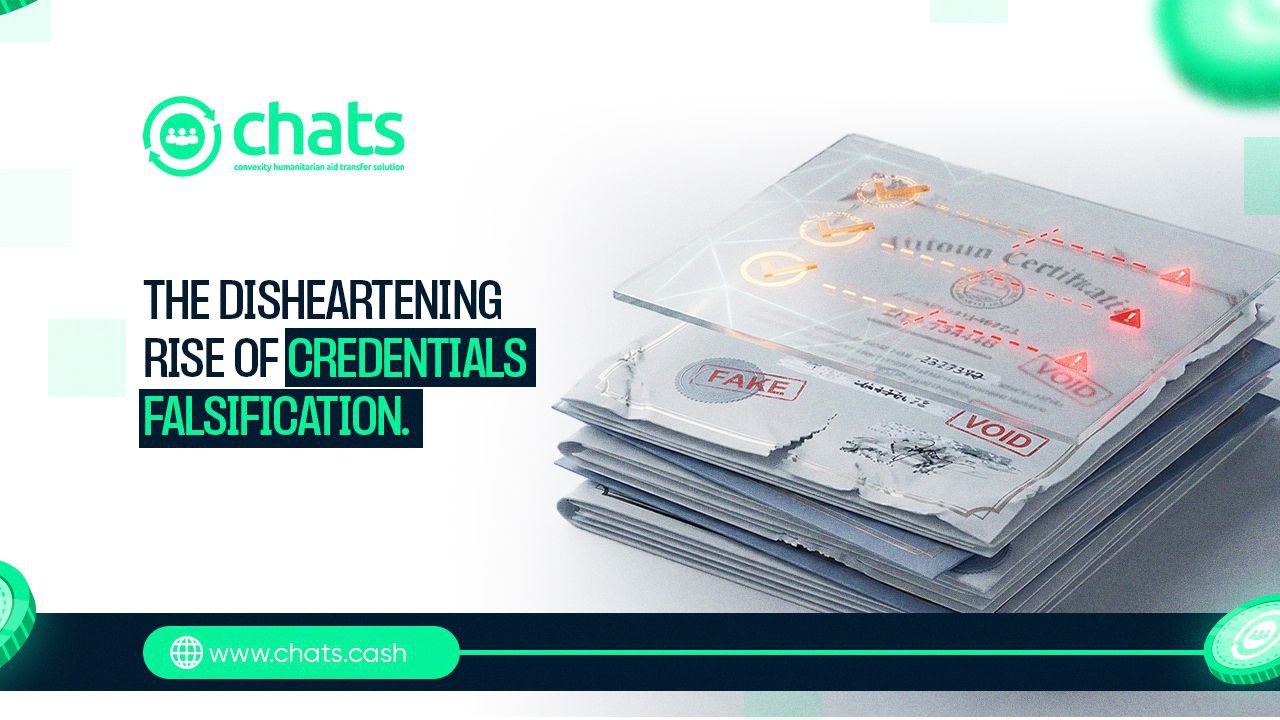
It is surprising, and honestly discouraging, that in 2026, fake credentials remain a major issue in Nigeria. Yet across the country, people continue to buy degrees, forge certificates, and alter academic transcripts to claim qualifications they never earned. The rise of sophisticated editing tools has only made it easier for fraudsters to produce documents that look almost identical to genuine ones. Beyond Nigeria, governments around the world, employers, and educational institutions are asking the same uncomfortable question: “How do we know the credentials people present are real?”
That uncertainty is eroding trust in professional competence, weakening public confidence, and creating risks for sectors where qualifications are non-negotiable like healthcare, aviation, engineering, and finance. Credential falsification is a proven and growing problem both in Nigeria and globally, with multiple documented cases showing how serious the crisis has become. In Nigeria, investigations during the COVID-19 pandemic exposed health workers and airport officials issuing fake COVID-19 test certificates, risking mass infections (Premium Times).
JAMB also revealed that some institutions were issuing certificates to ghost students who never attended classes or wrote exams, making it possible for individuals to legally present qualifications they never earned (The Guardian Nigeria).
Internationally, the problem is even bigger, fake universities and diploma mills now operate as a billion-dollar industry, selling forged degrees worldwide and undermining the credibility of genuine professionals (BBC).
Credential fraud may seem like a quick shortcut, but it harms everyone by allowing unqualified people to work as doctors, lawyers, engineers, and other professionals, putting lives and institutions at risk. It also sidelines hardworking students, forces employers to waste time and money on manual verification, and damages the reputation of schools and organizations. At its core, credential fraud destroys trust, and once trust breaks down, entire systems, economies, and public institutions begin to suffer.
BitCert is Convexity Technologies’ blockchain-powered platform designed to stop credential fraud by making academic and professional certificates easy to verify and impossible to alter. Because blockchain records cannot be changed once uploaded, BitCert ensures that every credential is permanent, secure, and fully transparent. Employers, embassies, and institutions can verify documents instantly with just one click, removing the slow and unreliable process of manual checks.
Each certificate clearly displays the issuing institution, date, program details, and credential type, allowing anyone to spot inconsistencies immediately. With decentralized security, no single person or institution can manipulate or alter the records, which is why global bodies like the World Economic Forum highlight blockchain as a major tool for transparency and trust.
Nigeria needs this level of verification to eliminate fake professionals in sensitive fields like healthcare and engineering, protect employers from hiring unqualified individuals, and ensure genuine graduates are not unfairly overshadowed by those using forged documents. Blockchain verification can also strengthen the country’s reputation globally and rebuild public trust in academic and professional systems.
As fraud becomes more digital, Nigeria must adopt digital solutions like BitCert. Convexity Technologies built this system to safeguard institutions and guarantee that every credential is authentic, verifiable, and tamperproof. To learn more or book an appointment, visit https://convexity.tech